💎 Hidden gems remaining: 9
Lima is the capital and by far the largest city in Peru with a population that exceeds Slovenia. It is divided into smaller municipalities that are vastly different from one another. Thanks to pollution and coastline location, fog is a day-to-day phenomenom that rarely lets the sun escape through.
Public Transport in Lima is a whole chapter on its own. Buses range from dirt-cheap local vans to hyper-organised Metropolitan line with a dedicated priority lane. They work so well they deserve to be called "Above ground metros". They are just as efficient and they can be accessed on the surface, rather than digging underground. Another common way of transportation is using cabs. and Cabify are the most affordable and reliable.


Barranco is famous for its street art, namely graffiti. If ugly street graffiti have no place in the world, those belong in a museum. That makes Barranco a big, open-air museum. Most visited places include a Jade Rivera museum and hippy surrounding houses, covered in art.


Just to be clear, you have to buy them elsewhere or police will prosecute you (sexual connotations are strictly forbidden in public areas). We recommend small juicy yellow ones, but bigger darker ones are yet to be tasted.
There are plenty of green parks spread throughout the city, where you can sit on a bench and prepare a plan while enjoying a banana.
Not every park is a good park. Despite google maps trying to lure you in, a park could just as well be a green land in the middle of a roundabout. Do not expect a bench there.

Small banana
Speaking of parks, there's a decently big green park (with benches!) full of cats. Cat lovers, this one is for you! 😻🙀
In the past, there was a huge problem with mice in this park. To solve it, people brought their cats. The cats stayed there and now accompany passers-by.

You simply cannot not pet them. Not that you would not want them not to, but they won't let you not pet them.
Being discovered only in the preivous century, Huaccas Pucacchina offers a deep insight into the cultures of the past in this area. Lima, Wari and Ichma cultures all put a stone into the mosaic of this one.
At this spot, a pyramid was built. But unlike the egyptian ones which are hollow, the Huaca Pucllana pyramid is fully solid. Except for tiny air spaces between the building stones which resist to devastating earthquakes.
The main building block of the pyramid is a mud brick called adobe. It is made of, well, mud, but also sand, calcium carbonate and seashells. Adobes are not put horizontally on top of each other glued with mortar, no, they stand vertically next to each other like books on a bookshelf. The "shelf" itself, however, contains horizontal bricks.

Huaca Pucllana

Adobes on the bokshelf
As learnt in the Maths class, "a triangle is a rigid shape. We can only deform it in such a way that we break it." But because building triangular book shelves would be muy loco, the cultures here outsmarted us all: they combined them in the shape of trapezoid.
When special people died, they were put in fetus position, mummified and burried in holes in the pyramid platforms along with tools they might find useful in afterlife. And dry corn. In the recent years, their sleep was interrupted by archeologists. Last week, another corpse was discovered!

"There were 8 to 12 mummies in each tomb." Where are they?

Llamas were used for meat and wool

Teeny-tiny early Peruvian people
In the centre of Miraflores, there's a small chocolate shop where you can learn the basics about the production of chocolate. A chika guapa will guide you through every chocolate type they have and provide you a pleasurable experience for your arroused taste buds.
It is an unforgetable experience even for non-chocolate lovers. Marko approves!

Raw cocoa is sour, roasted nibs are greasy and bitter
Maybe there won't be colours anymore becase the exhibitions change frequently. We went there expecting only to see ununderstandable art, but left the place full of new knowledge about the science of colours.
The most important attraction there was the pink military camouflage Barbie automóvil. Do not touch!
They are striving to achieve the best possible experience for their visitors. A part of this journey is definitely the 4D-effects, which contain not only visual sensoric but also olfactory: the scent. Is this deliberate or just a side-effect of freshly printed paper? Not sure.

🎶 Soy una niña Barbie
en el mundo Barbie 🎶

Kaleidoscope

Contemporary color
You can not return home empty-handed. And what a better place to equip yourself with various gifts then in a colourful indian market. As far as you gaze, different stalls with cheap knockoffs, promising to be real, mirror-like polished dishes and plates and vibrant wooly alpaka piñatas hanging from ceilings. Just do not get lost in the narrow streets of this maze.

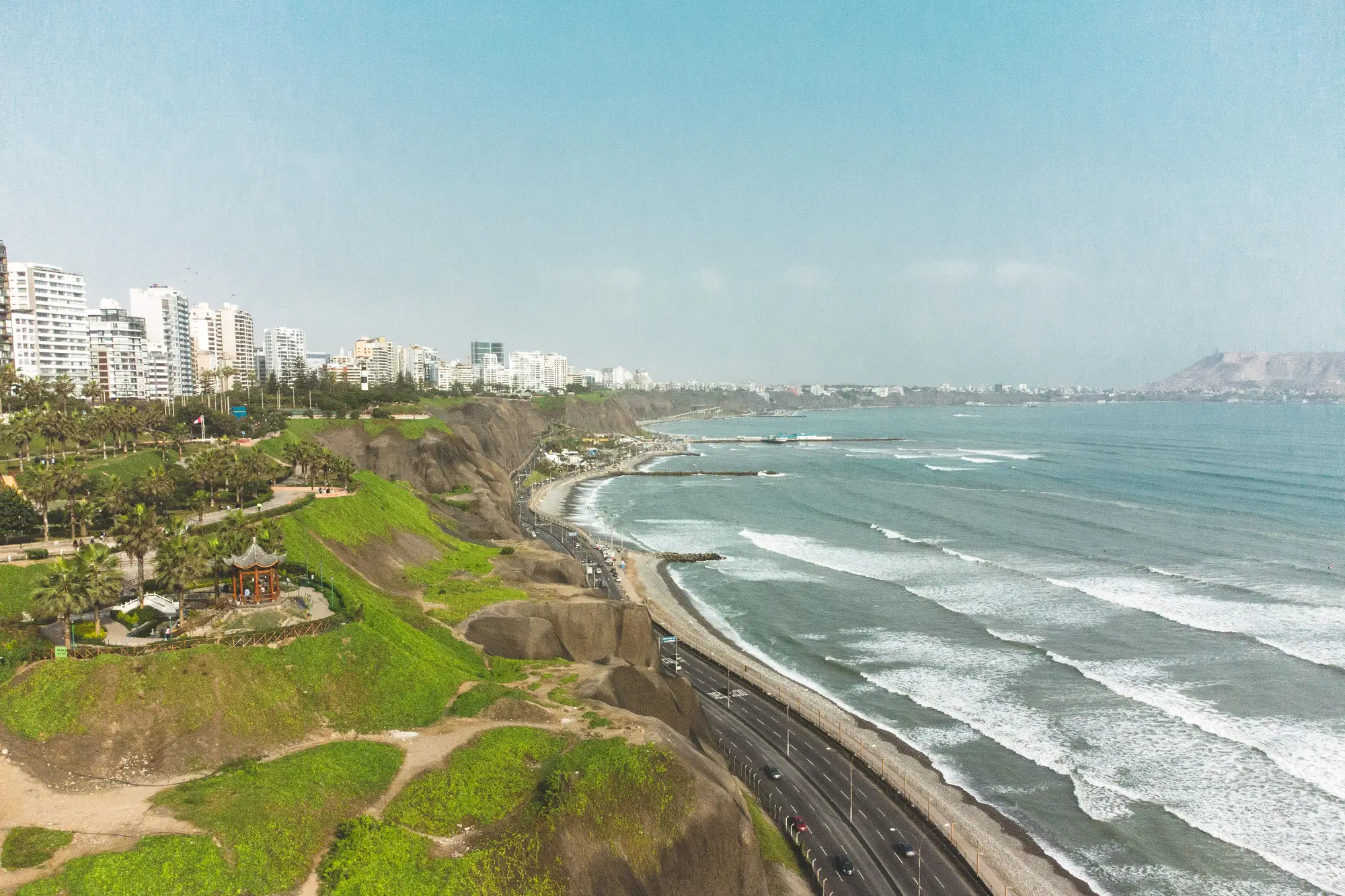
Shore should not only be a place for a highway but also for late-night strolls. Luckily Lima has got you covered. All the way from Barranco to Miraflores and on, you can either soak your feet, walking along the coast, or climb a bit to the promenade, which winds along the cliffs. Accompanied with various green parks, with benches, that provide shade if sun decides to break through thick fog.
When you reach Miraflores, be sure to check it out as well. Along with Barranco it is one of the richest Lima neighbourhoods, making it really safe and even more preety. Muy bonito. Do not fall for a trap and eat in one of touristy restaurants. Think and eat like a local.

Coastal highway and Malecon along the cliffs

Highway up close

Sunbathing finally

El conejo. Mi receta. Es único.
Peru is famous for varieties of potato and use of corn and beans. You will likely see at least one of them present in any ordered dish if not your classic american burger (or, who knows, we haven't tried hamburgesas). We figured out that the best way to eat is to be like a local. We strived to find restaurants which offered lunch menus that always consist of Entrata (apetizer), Platos de fondos (main dish) and a drink, most commonly the pineapple juice.
One exception to this was at a place called "Café Tostado". After reading numerous euphonious reviews about the place, it jumped places on our to-do list. Their iconic dish was el conejo (rabbit). The owner later told us that this is the only place in Peru where you are able to enjoy this trait. It came at no surprise that the food from this peruvian-italian chef was miraculously tasteful. Top-tier experience.

Minestra (just as my grandma would prepare)

Cara pulcra (left) & locro de zapallo (right)

Ensalada d' Palta, arroz a la Cubana (left) & ceviche d' pescado, lomo saltado (right)
