💎 Hidden gems remaining: 10
If you go to Puno, you will have puno problemov (a lot of problems) due to its high altitude. Puns aside, Puno is a city ashore of the idyllic lake Titicaca with an altitude of almost 4000 m. The sun is very strong and the air is cold, that's why most locals wear long warm clothes. Should you not be that helado (🥶), protect your skin with a screen!
Puno has its own railway station. 95 % of time, the ferrocarril (railway) serves as a a pavement to be walked on. But up to twice a day and once per night, the train approaches and you should not walk there! You cannot miss it as there are accoustic indicators both on the train itself and arround the railroad.


Before we begin, something must be told about the altitude illness, or how they call it, soroche. At such an altitude (almost 4000 metres), the air is only 0,6 times as dense as at the sea level. That means that only 60 % of oxygen you are used to gets to your lungs. This may cause various problems, including headaches, digestion problems, loss of appetite and/or taste, tiredness, until your body acclimatises.
The first day, we arrived at 5 am at the bus terminal. It was cold, we lacked sleep but weren't hungry. We still don't know why we didn't check-in right away but rather waited until 7 am. Anyway, soon we were at our room, falling asleep immediately.
When we woke up, something was not right. Marko suffered soroche. But Žan didn't have any problems apart from the lack of sleep. We hence rested most of the day. It seemed as though drinking enough water and a steady consumption of nutrients was a better day to deal with the low pressure than some local plants ... till the very next day.
Oh how the tables have turned. Soroche attacked Žan with full force. He therefore had to skip the tour to the Uros Islands we had planned to take together. Thus, Marko took the camera and went on the tour, showing the photos (accompanied with a thorough description) to Žan later on.
(actually, there was one day in-between when we were all full of energy and ready to prosper. But saying that here would break our Duck Song reference)
Even if you think you are better than soroche, avoid strenuous sports for a few days. This includes high-speed hiking to surrounding hills above 4000 m.
This might sound obvious, but it is not in these heights. That's why we emphasise it here. Even if you are not feeling any hunger, eat multiple times a day. If nothing else, a liquid yoghurt with some buns may save you the day.
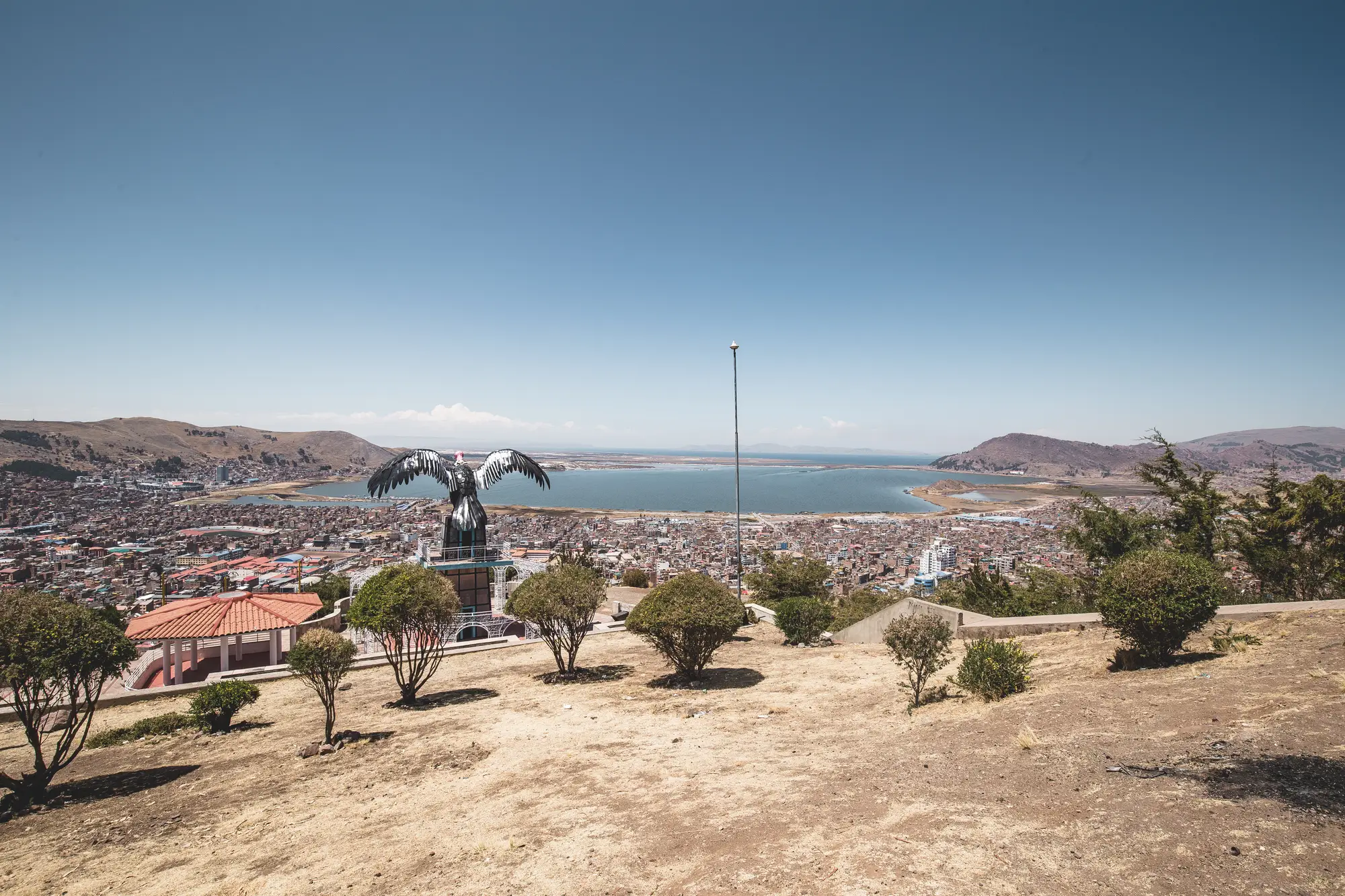
Leaving the cilivilisation behind, the walk uphill begins. The rural area is so steep the cars have difficulties driving off. Wear shoes with a decent grip! Sooner or later you will reach the stairway to heaven which will lead you to the hilltop of Mirador El Condor. A huge monument of some bird will await you there, but what's more, a breathtaking view of Titicaca and Puno will unfold in front of you.
You have just reached the 4000 m milestone. Congratulations! Keep in mind that your body has not acclimatised yet completely, so take it slowly.

The eagle is eager to eat me!

Selfie, as always
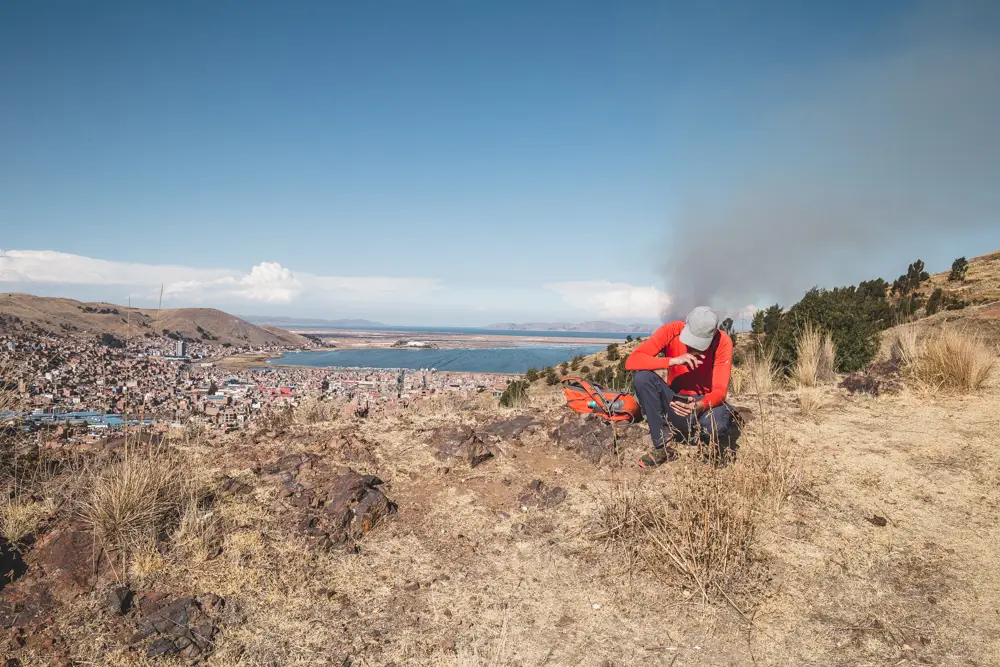
Sneak peek at the sneaky peak
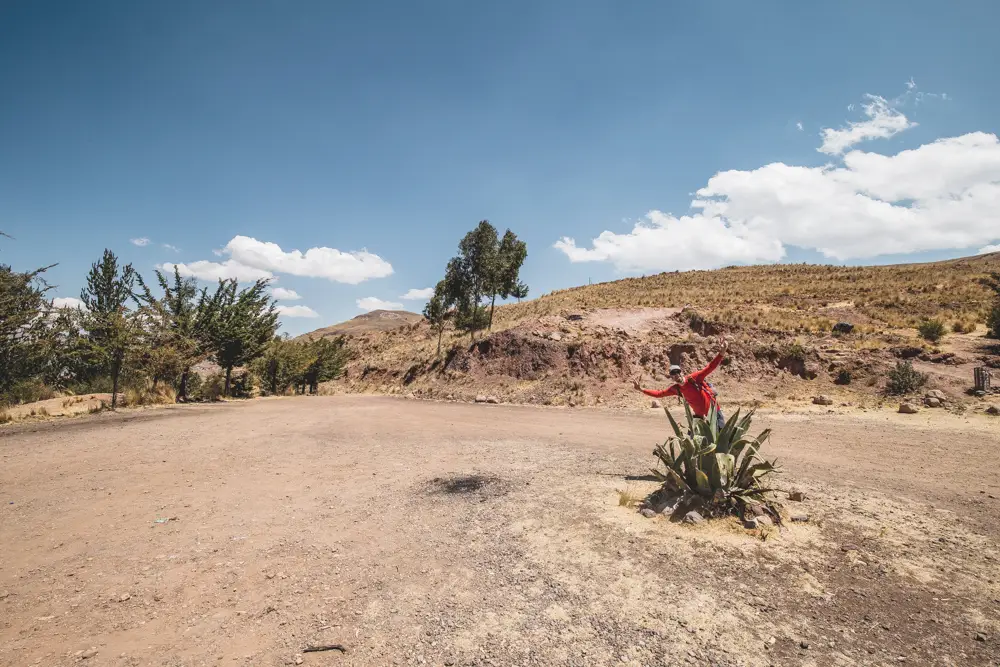
Sillustani is an old cemetery, or ruins thereof. According to pictures, various stone buildings should be there. However, we blindly trusted Google Maps and came to a random rural street (which was of course uphill) with no signs of Sillustani.
You see, the actual Sillustani tends to be tens of kilometres away. But some rickshaw company which advertises Sillustani on the roofs of their vehicles decided to drop a pin of one of their tuktuks to the Google Maps and add some photos of the actual site.
No Sillustani for you
We saw some stones in the distance and decided to give them a try. As we are known for hiking , we crossed sheep pasture of a private property, then settled once again at just above 4000 m. We got another scenic view and some promising opening shots with our drone.

Beep, beep, I'm a sheep
Did you know that the original Coca-Cola recipe contained coca leaves? It still does, only that they are decocainised first.
This museum will give you an insight into this sacred plant of the Inkas. They use it for just about anything. You have a stomachache? Eat coca. Trouble sleeping? Coca. Suffering soroche? Chew coca leaves. Are you hungry but do not have food nearby? You guessed it, coca is here for you.
In the upper floor, there's an exhibition of traditional clothing. You can even dress up as a member of one of the local tribes! When done, execute some traditional dance moves which exist solely for making fun of Spaniards.

Colourful clothes. Jajaja, you Spainard!
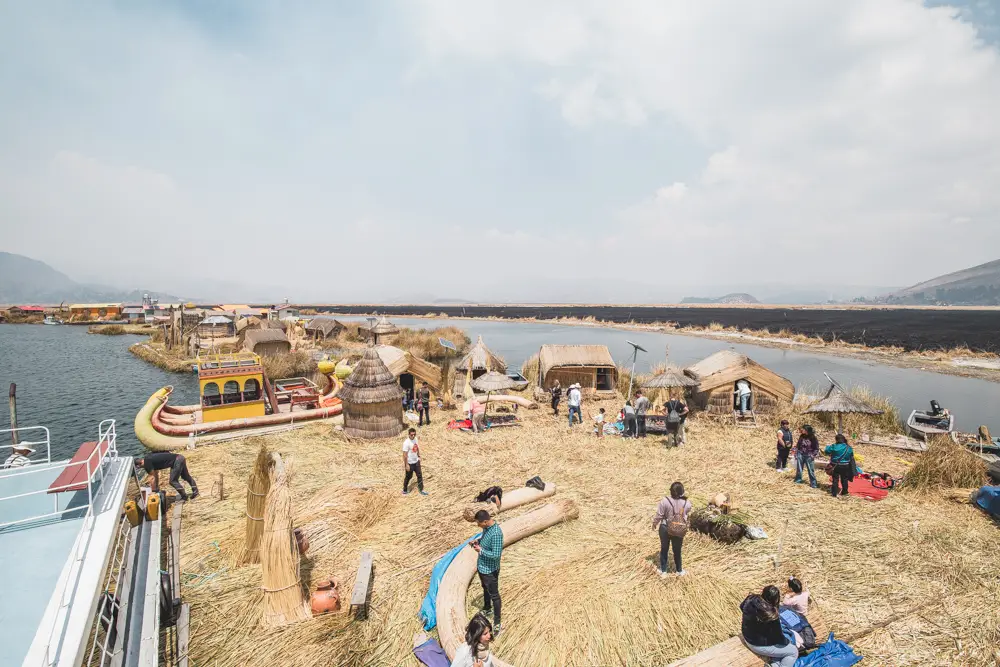
Uros Islands is a group of men-made islands supporting the lives of local communities. Here's how they are made: First, of wheat, into pieces of 1 metre thick. Then, tie them by ropes into small floating islands. With time, they connect themselves automatically. Another 1-metre-thick layer of wheat stems is placed at the top. The whole procedure takes about a year. After that, a layer of wheat needs to be added monthly to maintain the condition of the island. The island is anchored by six 15-metre-long sticks.
The hierarchy of each island is strictly determined. The mother president controls all the activities of around three families living on the island. There are three important structures: the huts for living, the kitchen placed on stone rocks to prevent burning down the island, and a 2-metre-high communication tower.
Trade routes are established between the islands. The main means of transport is a special wheat boat. The archipelago has 3 schools, which host teachers from Puno who commute daily. To obtain secondary education or enroll in university, either leaving Uros or a daily commute to Puno is required.
They eat fish, birds, potato and beans. All that is provided by the Titicaca lake. Funnily enough, no pumas swim in the lake despite its name. Titicaca namely consists of two Ketchuan words: Titi (puma) and Caca (great, big).
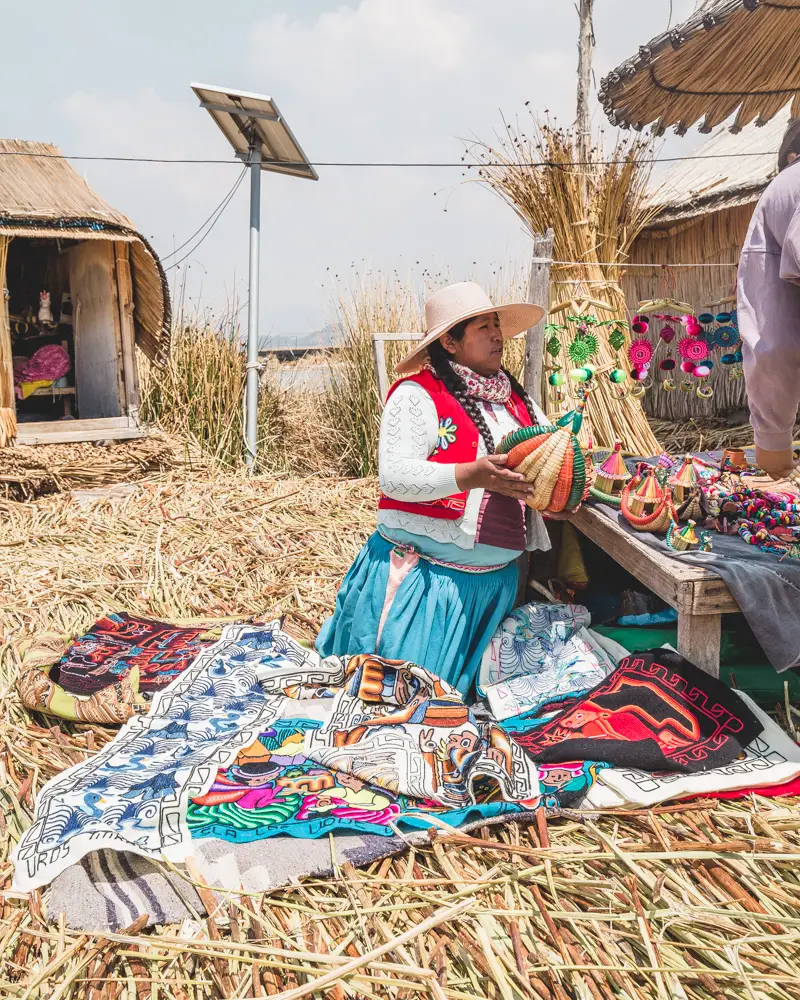
Mama, the VP of this island, is showing us her sombrero

Wow, we somehow managed to find a pizza! Smh, rice, we escaped you!
We did not eat much. Although we tried to, we were unable to finish a dish at any given time. We were craving for granola bowls (just like the ones we ate in Pai!) or something similarly fresh, but failed to find a restaurant offering that. You cannot escape rice in Peru. Try to, and potato will come after you. Accompanied by a bowl of rice.